- 24 September 2026
VU LSC Researchers Develop a New Tool for Controlling Gene Activity and Lithuania’s First Genetically Modified Vertebrates
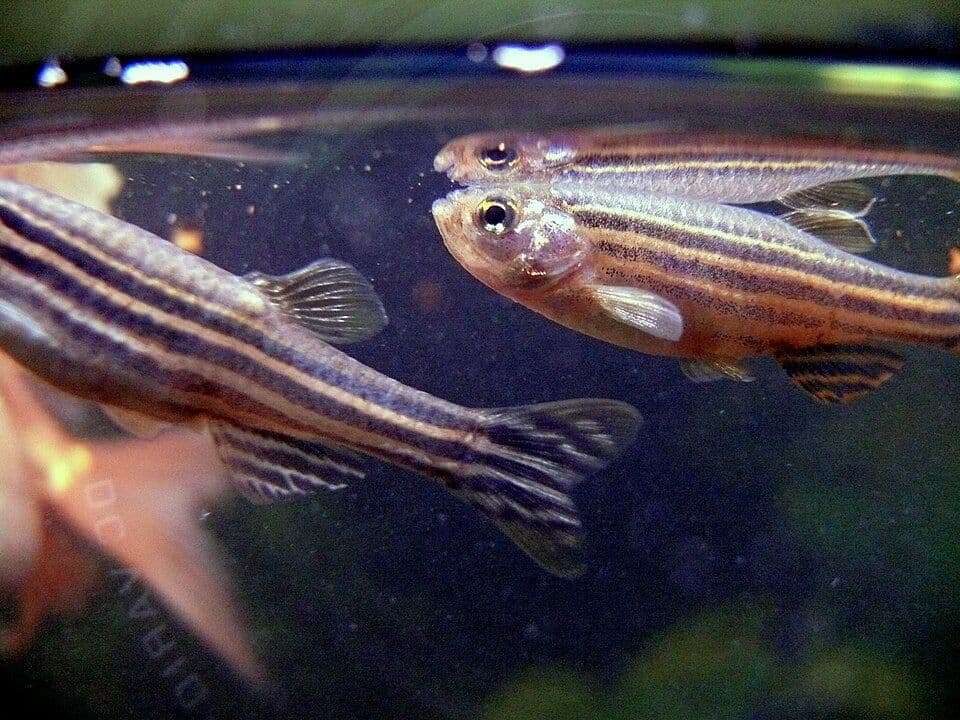
Researchers at the Vilnius University Life Sciences Center (VU LSC) have developed a genetic tool that allows exceptionally efficient control of gene activity at different stages in the development of a model fish species – the zebrafish. The tool makes it possible to study how the function of the same genes changes as an organism develops and progresses through later stages of life.
The findings, produced by a research team led by Dr Darius Balčiūnas and comprising Edita Bakūnaitė, Emilija Gečaitė, Samanta Žemalytė, Jaroslav Denkovskij, and Justas Lazutka, have been published in Genetics, one of the oldest and most influential journals in the field. The publication also received special editorial recognition, being singled out as one of the leading articles in the September issue.
The new genetic tool can be applied to the study of a wide range of biological processes – from organ regeneration to nervous system function and behaviour. Moreover, the zebrafish lines generated during the study are the first genetically modified vertebrate animals ever created in Lithuania.
Why is it important to control gene activity in research?
According to doctoral student Edita Bakūnaitė, one classic way of finding out what a particular gene does in an organism is to ‘switch off’ its activity and observe what changes. However, this approach does not always answer the questions researchers are most interested in.
‘Some genes are vital for the early development of an organism. If we switch off such a gene right at the start, the organism may not survive, so we can no longer study what function that same gene performs later on, once the organism has fully formed. For example, genes that matter during heart development may later influence the mechanism of heart regeneration,’ the researcher explained.
According to her, this problem can be solved by switching off the gene not during the organism’s early development, but later, once the main organ systems have already formed.
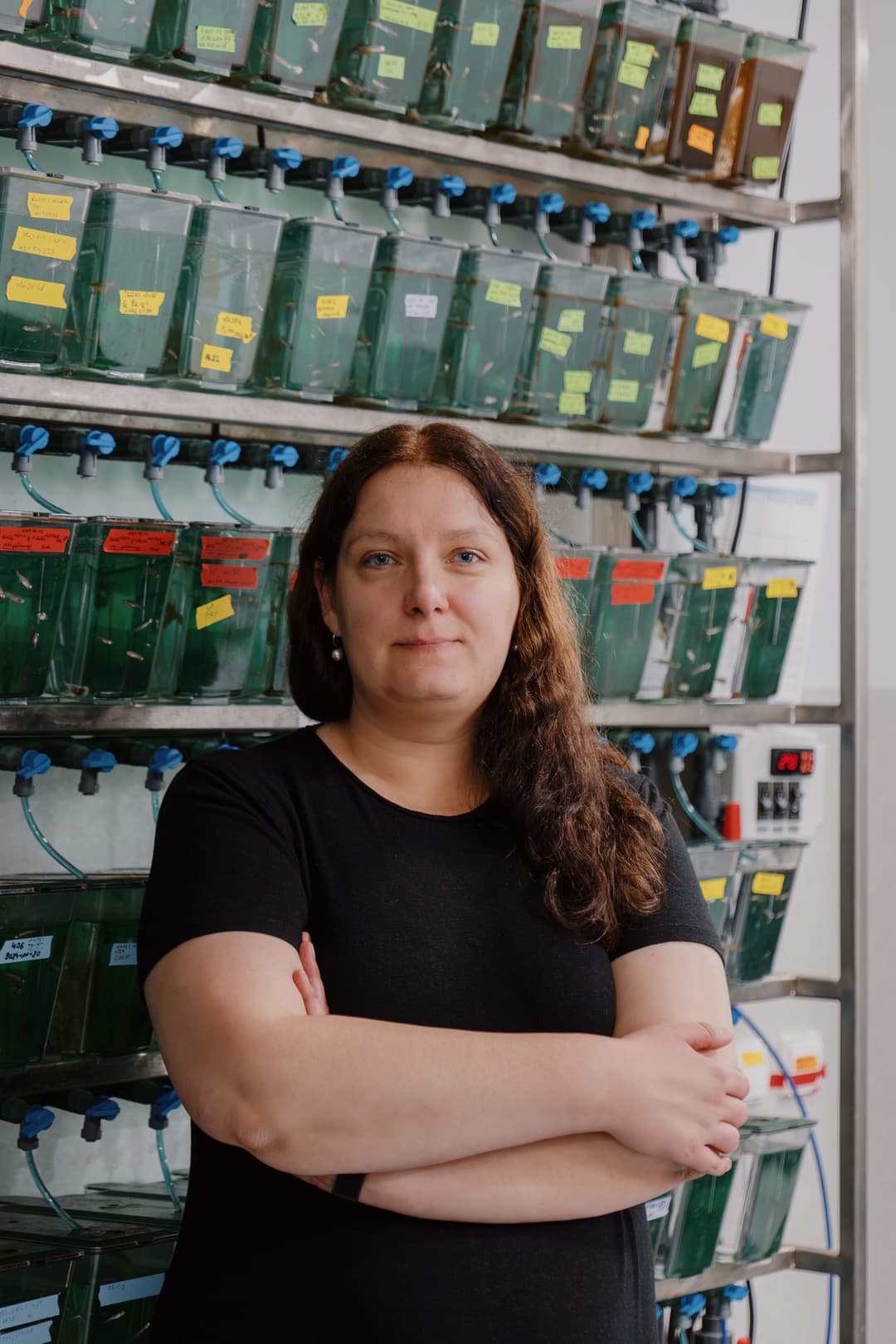
That is precisely why VU LSC researchers generated a zebrafish line in which the system regulating gene activity remains effective even in adult fish. The research team also engineered a new regulatory DNA sequence – the ubbR promoter – which helps ensure the system works efficiently at every stage of the organism’s development.
According to Edita Bakūnaitė, the promoters previously used had serious deficiencies: some worked well in embryos but lost activity later on, while others were not efficient enough across all tissues. The results achieved with the new system exceeded even the researchers’ own expectations.
‘We expected to create a more effective system than those used before, but achieving close to 100% gene inactivation in adult fish tissue was a pleasant surprise,’ said the researcher.
Zebrafish: an especially valuable research model
At first glance, the zebrafish – just a few centimetres long – may seem far removed from humans. Yet, according to Dr Justas Lazutka, around 70% of zebrafish genes have counterparts in the human genome.
‘This genetic similarity allows us to study a wide range of biological processes and disease mechanisms in a simpler organism that is easier to work with experimentally,’ the researcher explained.
Justas Lazutka noted that these fish are also attractive to researchers for practical reasons. They are small, do not require complicated care, and a single spawning can yield large numbers of embryos. This makes zebrafish a convenient model for studying a wide variety of biological processes.

‘What is especially important is that we can observe directly what is happening inside a developing organism. The embryos are transparent, so under the microscope we can see organs forming and other developmental processes taking place,’ the researcher said.
However, one of the most striking features of these fish, according to Dr Lazutka, is their ability to regenerate damaged or lost tissues and body parts.
‘Zebrafish can regrow fins, the spinal cord, optic nerves, and even the heart ventricle. That is what makes them so valuable for studying regenerative processes, which are far more limited in humans,’ said the VU LSC researcher.
Why does this research matter for humans?
According to Edita Bakūnaitė, one area where the new genetic tool could prove especially useful is research into tissue and organ regeneration.
‘By switching off individual genes and observing how the regeneration process changes as a result, we can better understand how tissues renew themselves in the zebrafish organism. This helps us look for answers to questions such as why, for instance, the human heart is left with a scar and impaired biological function after a myocardial infarction, whereas a zebrafish heart, just a couple of months after a simulated infarction, functions again as if it had never been damaged,’ said Edita Bakūnaitė.
According to her, such studies can help systematically identify the genes and biological processes important for tissue regeneration, with the resulting knowledge later tested in other biological models.
Another possible application of the new tool is in research on the nervous system and behaviour. Edita Bakūnaitė explained that the system makes it possible to switch off a gene in an adult fish and observe how this changes its behaviour, its response to stimuli, or other bodily functions.
‘The possible applications of a tool like this are limited only by the imagination,’ Edita Bakūnaitė summed it up.
Other laboratories are already using the tool
One important piece of evidence for the reliability of the method is that it also works outside the VU LSC laboratory.
The zebrafish line generated by the researchers has already been used in a partner laboratory in Taiwan. The ubbR promoter developed at VU LSC has also attracted the attention of other researchers – it can be applied not only when working with zebrafish but also with fish in the related genus Danionella.
According to Edita Bakūnaitė, this is particularly important because scientific research sometimes produces methods that work successfully in one laboratory but cannot be reproduced elsewhere with the same results.
‘The fact that our results have been independently reproduced in other laboratories confirms once again just how important and effective a tool we have managed to create,’ the researcher said.
More than five years in the making
Work on the new system began in early 2021. More than five years passed between the first DNA constructs and the final results and publication.
That is why the decision by Genetics not only to publish the work, but also to give it special editorial attention, became an important validation of the whole journey for the researchers.
‘Working in the laboratory, and later at a computer, writing up experiments and their results, can sometimes feel like a rather solitary occupation, during which the questions often come up: why am I doing this, and what is it for? Knowing that our publication received extra editorial attention gives real meaning to all the work that went into it,’ said Edita Bakūnaitė. The fact that the tool developed by the VU LSC researchers could be relevant to the wider scientific community was also demonstrated by how quickly it was adopted in other studies. Dr Darius Balčiūnas pointed out that in the very same week the official publication appeared, the ubbR promoter created by the VU LSC team was already being used and cited in a study published in the Nature journal.
‘The fact that our work was cited in a Nature publication the very same week our official publication came out might just be some kind of speed record,’ smiled the research team leader, Dr Balčiūnas.